The third quarter of 2025 marked an unexpected turning point for commercial insurance buyers. After years of relentless rate increases across most lines of coverage, preferred property risks began securing double-digit rate reductions as competitive dynamics intensified and capital flooded into the market.
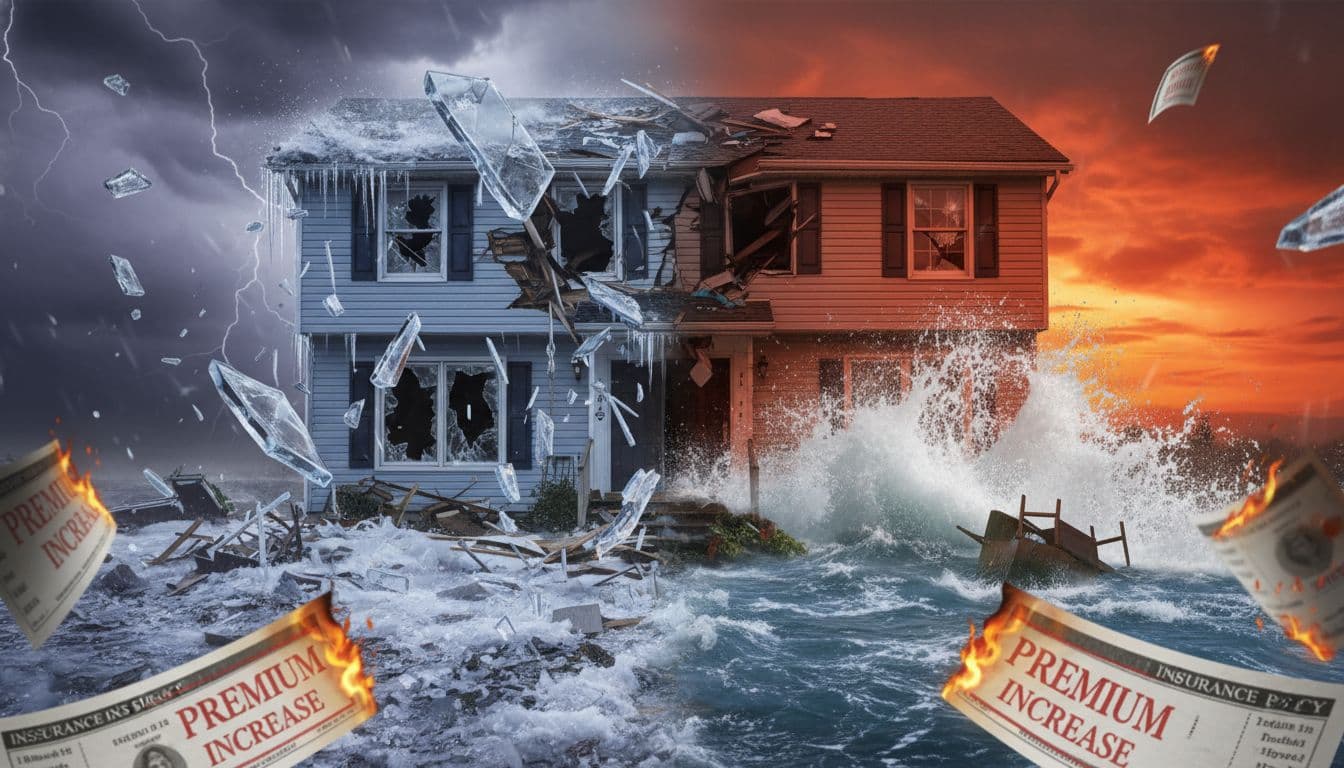
The shift to buyer-friendly conditions occurred even as global insured losses from natural disasters approached $100 billion in the first half of 2025—the second-highest six-month total on record, according to reinsurance industry data. The apparent contradiction between mounting catastrophe losses and declining rates has raised questions about market sustainability and whether current pricing adequately reflects long-term risk trends.
Industry analysts describe the Q3 market as a tale of two realities: surface-level improvements for buyers seeking renewal terms, and underlying structural challenges that continue to pressure loss ratios across property, cyber, and U.S. casualty lines. The divergence between short-term pricing trends and fundamental risk dynamics has created both opportunities and concerns for risk managers navigating the current environment.
Property Market Shows Dramatic Shift
The commercial property insurance segment experienced the most pronounced shift toward buyer-favorable conditions during the third quarter. Preferred risks—properties with strong loss histories, superior risk management practices, and favorable characteristics—saw rate decreases ranging from 10 to 20 percent in many cases.
The rate reductions represent a stark reversal from conditions that prevailed through much of 2023 and early 2024, when property rates increased by double digits even for well-managed risks. Insurers competed aggressively for high-quality accounts during Q3, with multiple carriers offering terms below expiring premiums to capture or retain business.
Several factors drove the property market softening. New capacity entered the market as insurers deployed capital raised during the hard market cycle. Existing carriers expanded their appetites for property business after years of cautious underwriting. Reinsurance costs, which had increased dramatically in prior years and contributed to primary insurer rate needs, stabilized and in some cases decreased.
Regional variations in property market conditions remained significant. Coastal properties exposed to hurricane risk continued facing challenging conditions, with rate increases persisting in many Gulf Coast and Atlantic seaboard markets. California properties exposed to wildfire risk similarly experienced less rate relief than properties in lower-hazard regions.
Wind-exposed properties in the Midwest and properties in the Northeast with limited catastrophe exposure benefited most from the Q3 softening. These risks attracted particularly aggressive competition from carriers seeking to deploy capacity in areas with more manageable risk profiles.
Catastrophe Losses Challenge Market Logic
The commercial property rate reductions occurred against a backdrop of extraordinary natural catastrophe activity. Insured losses from natural disasters in the first half of 2025 totaled approximately $98 billion globally, according to preliminary estimates from major reinsurance brokers and catastrophe modeling firms.
The figure represents the second-highest six-month catastrophe loss total in the history of the global insurance industry, exceeded only by the first half of 2011, when the Tohoku earthquake and tsunami in Japan generated massive insured losses. The 2025 losses stemmed from multiple severe events across different regions and perils.
North American severe convective storm activity—including tornadoes, hail, and damaging winds—produced insured losses exceeding $40 billion through June. The severe weather season proved particularly active, with multiple billion-dollar events affecting the central and southern United States. European flooding events contributed approximately $15 billion in insured losses. Additional losses came from Australian cyclones, Japanese typhoons, and various other weather events.
The disconnect between mounting catastrophe losses and declining property rates has prompted questions about market discipline. Some industry observers warn that insurers may be underpricing risk in the competitive environment, potentially setting the stage for inadequate returns when the next major catastrophe strikes.
Insurance executives defend current pricing strategies, arguing that rate decreases apply primarily to non-catastrophe-exposed or lightly exposed risks where loss experience supports lower pricing. They note that catastrophe-prone properties continue facing rate increases or capacity constraints in many markets.
Reinsurance market dynamics also influence the pricing environment. After years of rate increases, reinsurance capital has expanded, and reinsurance pricing has stabilized or decreased in some segments. Lower reinsurance costs enable primary insurers to reduce rates while maintaining acceptable margins, particularly for risks with limited catastrophe exposure.
Casualty Lines Face Continued Pressure
While property insurance experienced significant softening, U.S. casualty lines continued facing rate pressure during the third quarter. General liability, commercial auto liability, and umbrella/excess liability coverage all posted continued rate increases, though at moderating levels compared to prior quarters.
Commercial auto insurance remained among the most challenging lines, with rates increasing in the mid-to-high single digits for most accounts. Frequency and severity of auto claims have increased persistently, driven by distracted driving, higher vehicle repair costs, rising medical expenses, and increased litigation.
Nuclear verdicts—jury awards exceeding $10 million—continue occurring with concerning frequency in auto liability cases. Insurers point to social inflation, where changing societal attitudes toward corporations and litigation financing contribute to larger awards, as a key driver of casualty rate needs.
General liability insurance rates increased in the low-to-mid single digits during Q3 for most accounts. Similar to auto liability, general liability insurers cite persistent increases in loss severity, partly driven by social inflation dynamics. Product liability and premises liability claims have both generated larger settlements and verdicts.
Umbrella and excess liability coverage—which provides coverage above primary liability limits—continued experiencing rate increases in the mid-single digits. The umbrella market faces challenges from increased primary limits requirements and continued severity trends that push more claims into excess layers.
Professional liability insurance showed more varied conditions across different industry segments. Some professions experienced modest rate increases, while others saw flat renewals or slight decreases. Technology errors and omissions coverage, for example, showed more favorable conditions than directors and officers liability for publicly traded companies.
Cyber Insurance Continues Evolution
The cyber insurance market maintained relatively stable conditions during the third quarter, continuing a trend of rate stabilization that began in late 2024. After experiencing dramatic rate increases and capacity constraints in 2022 and 2023, the cyber market has matured considerably.
Insurers have developed more sophisticated risk assessment capabilities, implementing detailed questionnaires and requiring specific security controls before binding coverage. Multi-factor authentication, email filtering, endpoint detection and response systems, and other security measures have become standard requirements for cyber insurance eligibility.
Rate changes in Q3 varied based on insureds' risk profiles. Organizations with strong cybersecurity programs and favorable loss histories secured rate decreases or flat renewals. Companies with security gaps or prior losses faced rate increases or struggled to secure adequate capacity.
Liberty Mutual Insurance announced new cyber insurance products during the third quarter—Liberty Cyber Resolution™ and Liberty Tech Resolution™—reflecting the market's continued evolution. The products offer broader coverage in areas where capacity has increased and emphasize partnership between insurers and insureds throughout the risk management lifecycle.
Industry observers note that cyber insurance has transitioned from a purely transactional product to a relationship-based offering where insurers provide risk management support alongside traditional insurance protection. Carriers increasingly offer pre-breach services, including security assessments, training, and incident response planning.
The cyber market faces ongoing challenges despite rate stabilization. Ransomware attacks continue evolving, with threat actors developing more sophisticated techniques. State-sponsored cyber activities create additional concerns about large-scale, coordinated attacks. The interconnected nature of technology supply chains means that a single vendor breach can affect thousands of organizations.
Market Capacity and Competition Drive Changes
The influx of capital into commercial insurance markets represents a primary driver of Q3's buyer-favorable conditions. Insurance companies raised significant capital during the hard market of 2022-2024, either through public offerings, private placements, or retained earnings from improved underwriting results.
New market entrants, including startup insurers backed by private equity and venture capital, have launched with ambitions to capture market share. These new entrants typically target specific niches or employ technology-enabled underwriting approaches to differentiate themselves from established carriers.
Existing insurers expanded their risk appetites as they sought to deploy accumulated capital. Carriers that had restricted coverage or exited certain market segments during the hard market re-entered with competitive terms. This capacity expansion created heightened competition for desirable accounts.
Insurance brokers reported that preferred risks received multiple competing quotes during Q3 renewals, enabling buyers to negotiate favorable terms. Some accounts received five or more quotes, compared to two or three during the hard market. The competition extended beyond pricing to include enhanced coverage terms, reduced deductibles, and more flexible underwriting requirements.
However, accounts with unfavorable characteristics—significant losses, poor risk management, challenging industries, or high-hazard exposures—continued facing difficult market conditions. These accounts often received limited quotes, renewal terms that included significant rate increases or coverage restrictions, or in some cases struggled to secure coverage at any price.
Underlying Risk Trends Persist
Despite surface-level market improvements, fundamental risk trends that drove the hard market persist across multiple lines of business. Loss frequency and severity continue increasing for many coverage types, driven by factors including inflation, supply chain disruptions, labor shortages, and changing liability environments.
Property claims severity has increased due to higher reconstruction costs, supply chain constraints affecting building materials, and labor shortages in construction trades. These inflationary pressures mean that even without catastrophe losses, property insurers face higher costs to settle claims.
Casualty loss severity continues trending upward across most liability lines. Medical cost inflation, higher wage replacement costs for workers compensation claims, increased attorney involvement in claims, and jury verdicts that reflect inflation-adjusted values all contribute to higher per-claim costs.
Cyber losses show mixed trends. While ransomware payments have decreased in some cases due to improved preparedness and law enforcement actions, business interruption losses associated with cyber incidents have increased. The complexity and duration of recovery from significant cyber events creates extended business interruption exposure.
Industry analysts warn that if current pricing proves inadequate to cover emerging losses, the market could harden again rapidly. Insurers operating with insufficient rates during a soft market may face unexpected losses that force abrupt rate corrections. The cycle of hard and soft markets has characterized commercial insurance for decades, driven partly by competitive dynamics that periodically lead to inadequate pricing.
Regional and Industry-Specific Variations
Commercial insurance market conditions varied significantly across different geographic regions and industry sectors during Q3. Coastal regions exposed to hurricane risk maintained challenging property insurance conditions despite broader market softening. Markets including Florida, Louisiana, and Texas Gulf Coast areas saw continued rate pressure and capacity constraints.
Western states exposed to wildfire risk similarly experienced less favorable conditions than the national average. California, Oregon, and Washington properties in wildfire-prone areas faced limited carrier interest and rate increases even as property markets elsewhere softened.
Industry sectors also experienced divergent market conditions. Hospitality and restaurant risks, which faced extremely challenging conditions during and immediately after the pandemic, saw improved access to coverage and more competitive pricing during Q3. Manufacturing risks benefited from the property rate softening, particularly for accounts with favorable loss experience.
Technology companies found varied conditions depending on their specific characteristics. Software companies with limited physical assets secured favorable terms, while hardware manufacturers faced more challenging property insurance conditions. Professional liability for technology companies showed mixed results based on company maturity, revenue size, and specific services offered.
Construction industry risks faced continued challenges in liability lines despite some property market improvement. Umbrella liability for contractors remained difficult to place, with significant rate increases and coverage restrictions common. The combination of social inflation, nuclear verdicts, and project complexity continues pressuring construction liability pricing.
Outlook for Q4 and Beyond
Insurance industry executives and brokers offer mixed perspectives on whether Q3's buyer-favorable conditions will persist. Some anticipate further softening as additional capacity enters the market and competition intensifies. Others warn that underlying loss trends will eventually force rate corrections.
The fourth quarter of 2025 will provide important signals about market direction. Insurers will analyze nine-month results and assess whether current pricing proves adequate. Reinsurance renewal negotiations for January 2026 treaties will influence primary insurance market dynamics, with reinsurance rate changes typically flowing through to primary insurance pricing.
Natural catastrophe activity during the remainder of 2025 will significantly impact market conditions. An active Atlantic hurricane season or major earthquake could rapidly shift market dynamics toward buyers, particularly for catastrophe-exposed properties. Conversely, a benign catastrophe period could encourage further rate decreases as insurers compete for premium volume.
Risk managers and insurance buyers should approach the current environment strategically. While rate decreases create opportunities to reduce insurance costs, buyers should also focus on coverage enhancements, reduced deductibles, and improved terms that may be available in the competitive market. Building strong insurer relationships during favorable market conditions can provide benefits when conditions inevitably harden again.
The commercial insurance market's cyclical nature means current conditions will eventually shift. Savvy risk managers use soft markets not just to reduce costs but to strengthen their overall insurance programs for the longer term.