Billions in insurance reserves are flowing to offshore jurisdictions with murky oversight. AI systems are making life-altering coverage decisions with limited transparency. Now state regulators are stepping in with new rules that could fundamentally alter how the $3.2 trillion U.S. insurance industry manages risk, deploys capital, and uses technology.
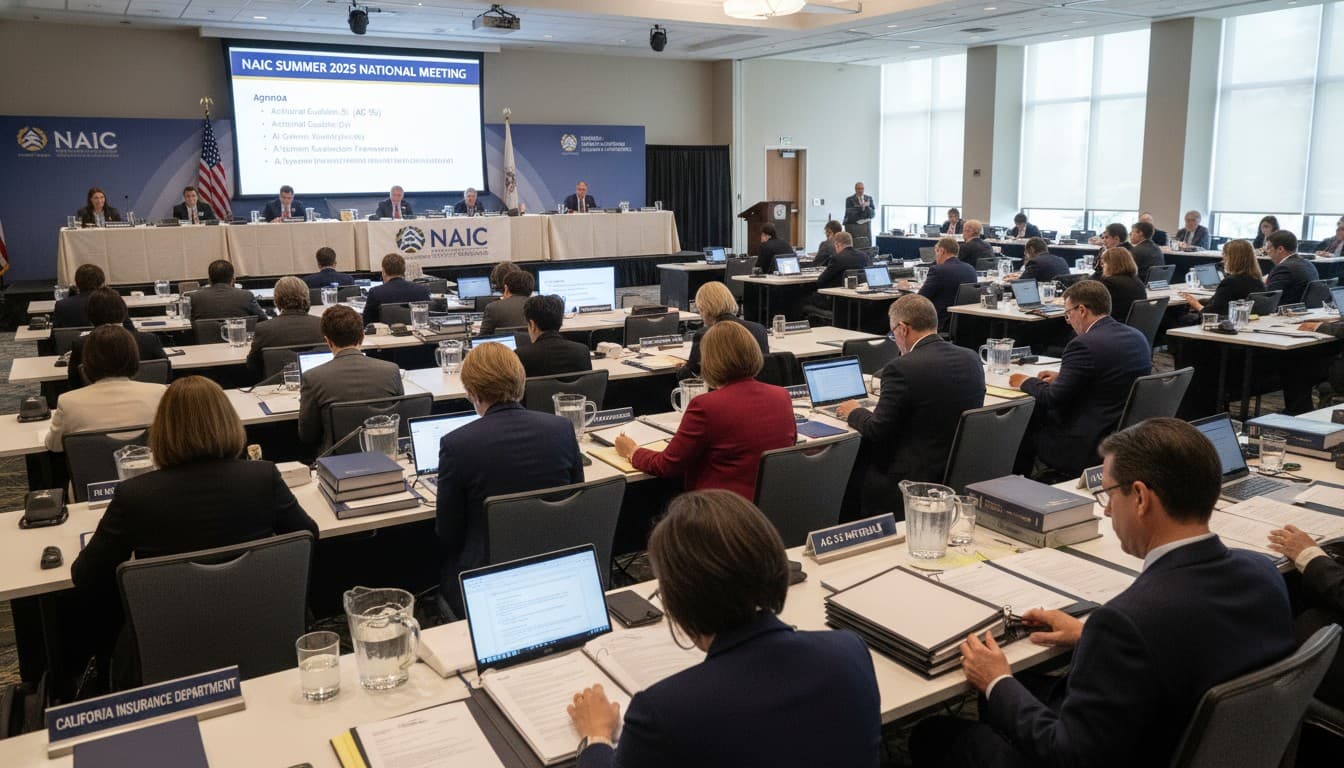
State insurance regulators convened for their Summer 2025 National Meeting with an agenda addressing some of the most pressing challenges facing the insurance industry: reserve adequacy in complex reinsurance transactions, growing concerns about offshore risk transfer, and insurers' rapidly expanding use of artificial intelligence in underwriting and claims operations. The regulatory developments that emerged will shape insurer operations and compliance obligations in coming years.
Actuarial Guideline 55: New Reserve Requirements
The NAIC's formal adoption of Actuarial Guideline 55 represents the culmination of years of regulatory work to address perceived gaps in reserve requirements for certain life insurance reinsurance structures. AG 55 establishes new asset adequacy testing requirements for life insurers with asset-intensive reinsurance transactions, with disclosure requirements beginning with the December 31, 2025 annual statement.
The guideline addresses specific reinsurance arrangements where regulators identified concerns about whether cedent reserves adequately reflect the risks being retained. Under some reinsurance structures, ceding insurers reduce their statutory reserves based on risk transfer to reinsurers, but questions arose about whether the remaining reserves adequately covered risks that cedents effectively retained despite contractual risk transfer.
AG 55 directs cedents to project the combined post-reinsurance obligation, define a defensible starting asset amount, and evaluate whether that asset base can withstand moderately adverse conditions. The guideline requires enhanced asset adequacy analysis demonstrating that reserves maintained by the cedent, combined with reinsurance protection, provide adequate coverage for policyholder obligations.
Transactions subject to AG 55 include certain captive reinsurance arrangements, particularly those involving affiliated reinsurers or special purpose vehicles established specifically to assume reserves from ceding companies. The guideline applies prospectively to new and renewal transactions, though existing agreements may face scrutiny during regular financial examinations.
Industry representatives expressed mixed reactions to AG 55 adoption. Actuarial organizations generally supported enhanced asset adequacy requirements as strengthening financial examinations and improving insurer solvency oversight. However, some insurers and reinsurers raised concerns about implementation complexity and potential constraints on legitimate risk management strategies.
The guideline includes transition provisions recognizing that insurers need time to implement new analysis requirements and potentially restructure affected reinsurance programs.
Offshore Reinsurance Under Intensified Scrutiny
Beyond AG 55's formal adoption, NAIC discussions reflected renewed regulatory focus on offshore reinsurance transactions. NAIC President Jon Godfread emphasized the need for proactive regulation related to offshore reinsurance, noting concerns about assets moving to jurisdictions that don't offer the same transparency or oversight as reciprocal jurisdictions.
Offshore reinsurance has grown significantly as insurers seek capacity, competitive pricing, and capital efficiency through transactions with reinsurers domiciled in jurisdictions including Bermuda, Cayman Islands, Barbados, and various European locations. While many offshore reinsurers maintain strong financial positions and operate under credible regulatory regimes, regulators worry about outliers and situations where limited regulatory visibility creates potential risks.
State regulators discussed several specific concerns during the meeting. Collateral requirements for unauthorized reinsurers—those not licensed in the state where the ceding insurer operates—came under scrutiny. While existing rules generally require full collateralization of reserves ceded to unauthorized reinsurers, various mechanisms allow reduced collateral under certain circumstances.
Regulators questioned whether collateral reduction provisions adequately protect ceding insurers and their policyholders when reinsurers operate in jurisdictions where regulators cannot easily examine operations, assess financial conditions, or intervene if problems arise.
Group supervision challenges also featured prominently. Modern insurance groups often include entities domiciled across multiple jurisdictions, creating coordination challenges for regulators seeking to understand enterprise-wide risk exposures. When significant risks transfer to offshore group affiliates, domestic regulators may struggle to assess whether consolidated group capital adequately supports all obligations.
The NAIC indicated that enhanced data collection about offshore reinsurance transactions would inform future policy development. No immediate rule changes emerged from the meeting's offshore reinsurance discussions, but the attention signals continued regulatory scrutiny. Insurers using offshore reinsurance should anticipate questions from state regulators during financial examinations and potentially enhanced reporting requirements in future regulatory updates.
AI Oversight Framework Takes Shape
The NAIC's work on addressing insurers' use of artificial intelligence systems advanced significantly with exposure of a draft AI Systems Evaluation Tool designed for regulatory use, as over 70% of U.S. insurers now use or plan to use AI and machine learning. The tool provides regulators with structured frameworks for assessing whether insurers' AI applications comply with existing requirements around fairness, transparency, and consumer protection.
AI adoption across the insurance industry has accelerated rapidly. Insurers deploy machine learning models for underwriting decisions, claims processing, fraud detection, customer service, and numerous other applications. While AI offers potential efficiency gains and improved risk assessment, it raises concerns about algorithmic bias, decision transparency, and consumer impacts.
State insurance laws generally don't specifically address AI, but existing requirements around unfair discrimination, rating plan transparency, and claims handling apply regardless of whether insurers use traditional or AI-powered methods. Regulators face challenges determining whether AI systems comply with these existing requirements given the complexity and opacity of many machine learning models.
The draft AI Systems Evaluation Tool exposed during the Summer 2025 meeting provides regulators with structured questions and assessment criteria for examining insurer AI deployments. The tool covers multiple dimensions including data governance, model development and validation, bias testing and mitigation, model monitoring, and consumer disclosure practices.
Key elements include requirements for insurers to document AI system purposes, data sources, and decision logic. The framework addresses transparency requirements, examining whether insurers can explain AI-driven decisions to consumers and regulators. While complete transparency into complex neural network models may be impractical, regulators expect insurers to provide meaningful explanations of factors influencing decisions and maintain human oversight.
Third-party AI vendor management receives attention in the evaluation framework. Many insurers purchase AI solutions from technology vendors rather than developing systems internally. The tool helps regulators assess whether insurers adequately oversee vendor AI systems and ensure compliance with regulatory requirements despite not controlling underlying algorithms.
As of March 2025, 24 states had adopted the NAIC Model Bulletin on the Use of Artificial Intelligence Systems by insurers with little to no material changes. The NAIC emphasized that the evaluation tool provides guidance rather than establishing new requirements, with existing insurance laws remaining the standards against which AI systems are judged.
Industry reactions to the AI evaluation framework varied. Technology-forward insurers generally welcomed regulatory clarity about expectations for AI governance and oversight. Consumer advocacy organizations supported regulatory attention to AI bias and transparency concerns. However, some industry participants expressed concerns about potential regulatory burden and whether standardized evaluation tools adequately account for diverse AI applications across different insurance contexts.
The NAIC indicated that the exposure period would allow stakeholders to provide feedback before the evaluation tool moves toward adoption. Regulators plan to pilot the framework with volunteer insurers and refine the approach based on practical experience before broader implementation.
Additional Model Law Updates
Beyond the headline developments, the Summer 2025 NAIC meeting included progress on various model laws and regulations that states may adopt. Updates to the Insurance Data Security Model Law received attention, addressing emerging cyber threats and incorporating lessons learned from recent cyber incidents affecting insurers.
Climate risk disclosure requirements also advanced. The NAIC continues developing frameworks for insurers to disclose climate-related financial risks and risk management strategies, reflecting growing regulatory attention to climate as both a physical risk affecting claims and a transition risk as economies shift toward lower carbon emissions.
The meeting included discussions of updates to various other model regulations addressing topics including annuity suitability, producer licensing, corporate governance, and own risk and solvency assessment requirements.
Coordination with Federal Regulators
The NAIC's 2025 priorities include strengthening the state-based insurance regulatory system while addressing issues such as artificial intelligence, risk-based capital, catastrophe risks, and protecting retirement savings. Representatives from the Federal Insurance Office, Treasury Department, Federal Reserve, Securities and Exchange Commission, and Consumer Financial Protection Bureau participated in discussions about market monitoring, systemic risk assessment, and coordination between state and federal supervisors.
These discussions emphasized the unique U.S. insurance regulatory structure where states maintain primary regulatory authority while federal agencies hold jurisdiction over specific areas or systemically important institutions. Effective coordination helps avoid regulatory gaps or conflicts.
Industry Outlook Following Regulatory Developments
The regulatory actions and discussions at the NAIC Summer 2025 meeting will influence insurer operations and strategic planning in coming years. AG 55 implementation will require affected insurers to enhance actuarial analysis and potentially restructure some reinsurance programs, with the first disclosure-only memorandum due to domestic regulators by April 1, 2026.
Offshore reinsurance scrutiny suggests that insurers should prepare for enhanced regulatory questions about these transactions. While no immediate rule changes emerged, the attention signals potential future requirements around disclosure, collateral, or group supervision that could affect the economics of offshore reinsurance programs.
AI oversight framework development indicates that regulators expect insurers to maintain robust governance around AI systems even absent specific AI regulations. Insurers should ensure they can demonstrate compliance with existing requirements on fairness, transparency, and consumer protection when using AI tools. Documentation of AI development, testing, monitoring, and oversight will increasingly face regulatory scrutiny.
The cumulative effect of these regulatory developments reflects state insurance regulators' balancing act: promoting insurance market innovation and efficiency while ensuring solvency, preventing regulatory arbitrage, and protecting consumers. As insurance business practices evolve through new reinsurance structures, technology adoption, and international expansion, regulatory frameworks must adapt to maintain effective oversight.
Insurance industry participants should monitor implementation of the Summer 2025 meeting's regulatory actions and participate in ongoing NAIC processes where additional regulatory development occurs.