Your health insurance premiums could double in January. Here's why—and what you need to do in the next 45 days.
When Maria Chen checked her Healthcare.gov account last week, her heart sank. Her monthly premium, currently $187 thanks to federal subsidies, would jump to $652 starting January 1st—if Congress doesn't act. She's one of 42 million Americans caught in the crossfire of the longest government shutdown in U.S. history.
The 43-day crisis that just ended wasn't really about government budgets. It was about your health insurance. And with funding running out again on January 30, 2026—just 75 days away—the chaos could start all over again.
If you've been confused by the shutdown news, frustrated by three-hour airport security lines, or noticed your SNAP benefits were cut in half last month, you need to understand what just happened. More importantly, you need to know what to do right now to protect yourself and your family.
What Actually Caused This Mess?
The shutdown wasn't about the federal budget in general. It was about one specific thing: health insurance subsidies under the Affordable Care Act.
The Simple Explanation
Democrats wanted to extend enhanced ACA subsidies that help millions of Americans afford health insurance premiums. Republicans refused. Neither side would budge, so at 12:01 a.m. on October 1, the federal government shut down.
The subsidies in question were expanded under the American Rescue Plan Act of 2021 and are set to expire on December 31, 2025. For the 42 million Americans who buy insurance through state exchanges, these subsidies can mean the difference between affordable coverage and premiums they simply can't pay.
What Just Happened to America?
For 43 days, the impacts cascaded across every sector of American life.
Federal Workers Suffered
At least 670,000 employees were furloughed. Another 730,000 "essential" workers had to show up without paychecks. By October 24, over 500,000 people missed their first full paycheck. The Trump administration even attempted mass layoffs during the shutdown, notifying 4,100 workers on October 10 that they'd be fired—though a judge blocked this on October 28.
Food Assistance Stopped
The USDA announced on October 27 that SNAP benefits wouldn't go out on November 1. After lawsuits, they agreed to send half benefits on November 3, leaving millions of families scrambling.
Air Travel Became a Nightmare
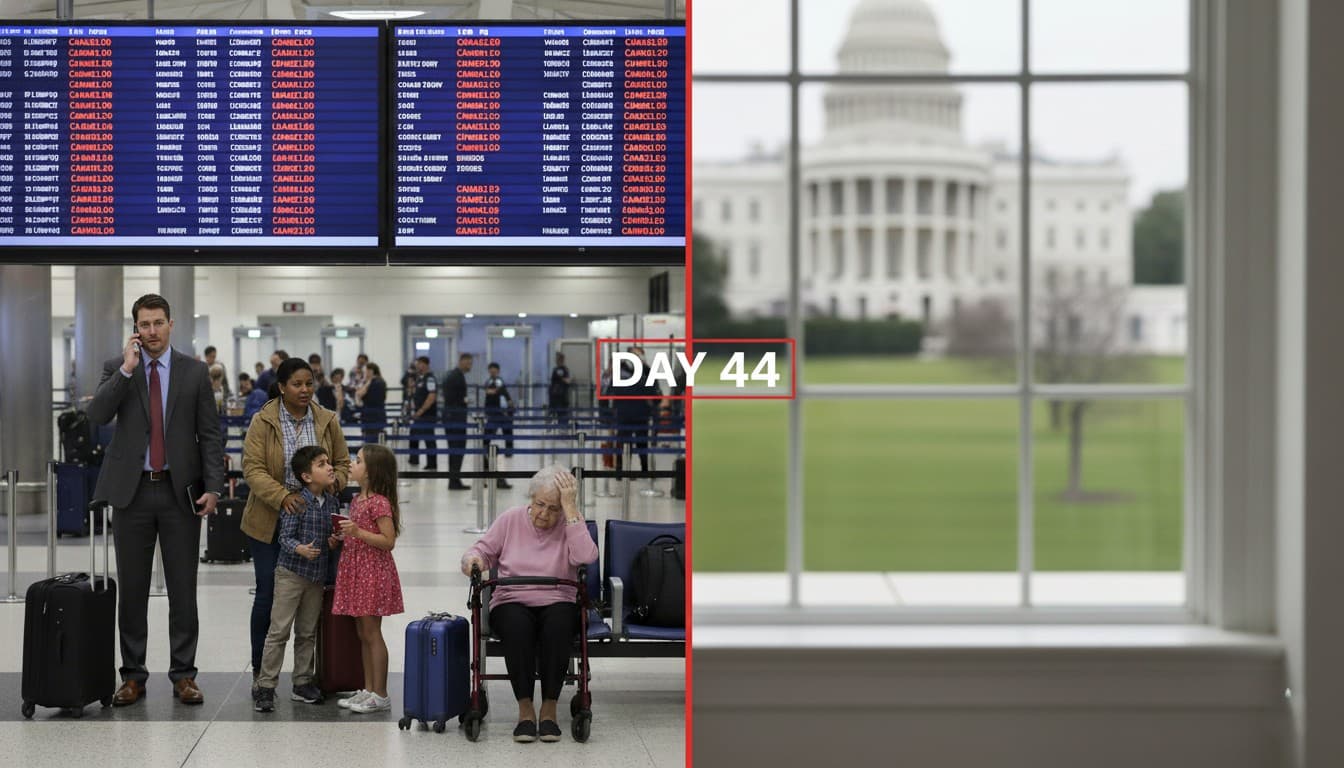
By November 7, unpaid air traffic controllers were calling out sick to work second jobs. The FAA cut flight capacity by 6% at 40 major airports. On November 12 alone, 878 flights were cancelled. Security lines at some airports exceeded two hours as TSA screeners—also unpaid—called in sick at record rates.
Everything Else Ground Down
National parks closed or operated with skeleton crews. Museums shut their doors. Small businesses couldn't get SBA loans. FDA food safety inspections were curtailed. IRS tax refunds got backed up.
How It Finally Ended
On November 9, eight Democrats broke ranks and voted with Republicans to advance a deal. Three days later, on November 12, President Trump signed legislation to reopen the government.
The Deal's Key Provisions
The deal included back pay for all affected workers, language protecting federal employees from further layoffs through January, and a Republican promise to hold a vote in December on ACA-related legislation of Democrats' choosing.
The Catch Nobody's Talking About
The funding only lasts until January 30, 2026. That's just 75 days away. And the core dispute over ACA subsidies? Still unresolved.
What You Need to Do Right Now
Depending on your situation, here are the concrete steps you should take.
If You Buy Health Insurance Through the ACA Marketplace
This is urgent. Your subsidies expire December 31, 2025, which could dramatically increase your 2026 premiums.
Action Steps
- Log into Healthcare.gov or your state exchange to check how much of your premium is currently subsidized
- Calculate what your premiums would be without subsidies—this is what you might pay starting January 1
- Watch for the promised Senate vote in December (no specific date announced yet)
- Sign up for alerts from Healthcare.gov about subsidy changes
- Contact your senators to express your views on extending the subsidies: Find them at senate.gov/senators/senators-contact.htm
- Budget for higher premiums starting January, just in case the subsidies aren't extended
Real Talk
If your subsidies aren't extended and you can't afford the higher premiums, you may need to explore other options like employer coverage, Medicaid (if eligible), or high-deductible plans with health savings accounts.
If You're a Federal Employee
You got back pay by mid-November, but another shutdown looms.
Protect Yourself Now
- Build an emergency fund covering at least 2-3 months of expenses if possible
- If you have a 401(k) or TSP, familiarize yourself with hardship withdrawal rules now, not during a crisis
- Document everything related to the shutdown for potential future legal claims
- Connect with your union representatives about protections
- Consider side income options that don't violate federal employment rules
- Mark January 30 on your calendar and watch for signs of another shutdown starting mid-January
Current Protection
The deal includes language protecting you from layoffs through January, but that protection expires with the funding.
If You Receive SNAP or Other Federal Benefits
SNAP benefits resumed after the shutdown, but you should prepare for potential disruption.
Take These Steps
- Build a small emergency food supply if possible—even an extra week's worth helps
- Know your local food banks: Find them at feedingamerica.org/find-your-local-foodbank
- If you have freezer space, stock up on basics when you can
- Save the customer service number for your state's SNAP program
- Watch news around January 25 for signs of another shutdown
If You Travel Frequently
Plan ahead for late January travel to avoid potential disruptions.
Travel Planning Tips
- Avoid booking critical travel (job interviews, medical appointments, weddings) for January 30-February 15 if possible
- If you must travel during this period, book the first flight of the day—they're less likely to be cancelled
- Enroll in TSA PreCheck or Clear to potentially skip longer security lines (though even these had delays)
- Build extra time into airport arrivals—add at least an extra hour
- Consider travel insurance that covers cancellations due to government shutdowns
- Have backup plans for critical trips
High-Risk Airports
Chicago O'Hare, Denver International, and Atlanta Hartsfield-Jackson had the most disruptions during the last shutdown.
If You Run a Small Business
Prepare for potential SBA loan delays and federal contract disruptions.
Business Preparation
- Apply for any needed SBA loans before January 15 to ensure processing time
- Build cash reserves if you're dependent on SBA financing
- Have alternative lending sources identified (though they'll be more expensive)
- If you're in a contract with federal agencies, include shutdown contingency language
For Everyone: Make Your Voice Heard
76% of Americans support automatic continuing appropriations that would prevent shutdowns, but Congress hasn't acted on this.
How to Push for Change
Contact your representatives. Call both senators and your House representative. The Capitol switchboard is (202) 224-3121. Simple message: "I support legislation for automatic continuing resolutions to prevent government shutdowns."
Be specific about how the shutdown affected you. Personal stories matter more than general complaints. Did you miss a paycheck? Face higher grocery bills? Cancel a trip?
Sign up for alerts. GovTrack.us lets you track specific bills and get notified of votes. Set up alerts for any bills related to automatic appropriations or the January 30 funding deadline.
Vote accordingly. The 2026 midterm elections are in November. Make government functionality a voting priority.
What to Watch For
Mark these critical dates on your calendar.
Key Dates
- December 2025 (date TBD): Promised Senate vote on ACA-related legislation
- December 31, 2025: Enhanced ACA subsidies expire
- January 15, 2026: Watch for signs of breakdown in negotiations (historically, problems emerge about two weeks before funding deadlines)
- January 30, 2026: Current funding expires—potential shutdown begins if no deal is reached
The Bottom Line
The 43-day shutdown wasn't just political theater—it was a preview of potential chaos ahead. The same dispute that caused it remains unresolved, and the January 30 deadline is approaching fast.
You Can't Control Congress, But You Can Control Your Preparation
Check your ACA subsidies, build emergency savings if you're a federal worker, stock up if you're on SNAP, and avoid critical travel around late January.
Most importantly, don't assume this was a one-time crisis. With only 75 days until the next potential shutdown, treating this as a warning is just common sense.
The government may have reopened, but the fight that closed it is far from over. Now you know what to watch for—and what to do about it.
Need More Information?
- ACA marketplace: Healthcare.gov
- Federal employee resources: AFGE.org (largest federal employee union)
- SNAP information: fns.usda.gov/snap
- Contact Congress: usa.gov/elected-officials
- Track legislation: GovTrack.us